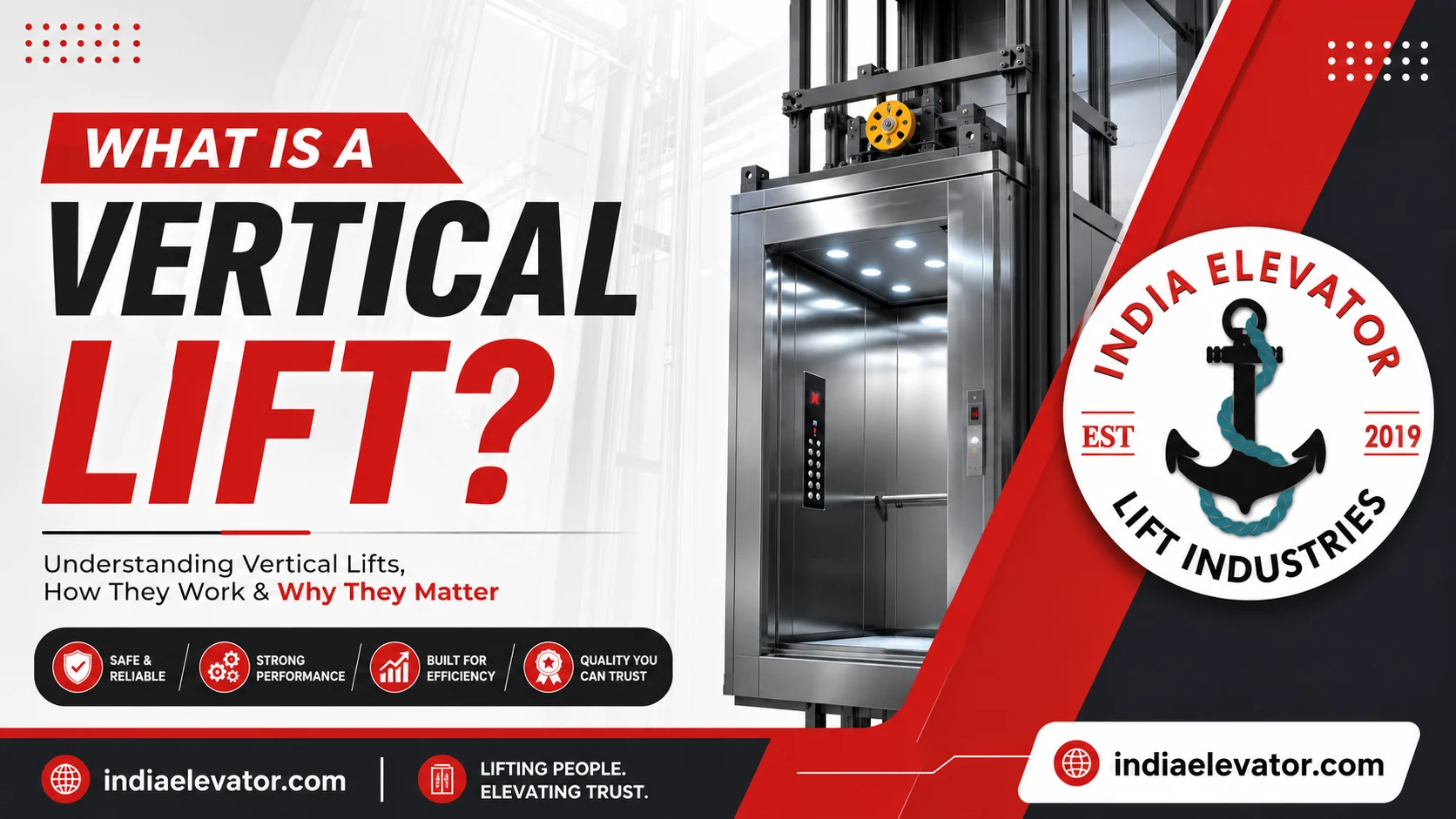
The vertical lift system operates to transport heavy materials, together with products, equipment, and industrial loads, between different levels of a building. These systems benefit industrial facilities by increasing their operational efficiency and decreasing their need for manual work while enabling seamless material transportation.
Industrial facilities need material handling systems that operate at high efficiency to achieve better operational performance through improved material movement processes. Businesses that operate multiple floors of their facilities have increased their demand for secure and dependable lifting equipment that needs to operate throughout their vertical expansion. The vertical lift system provides businesses with an efficient solution to transport goods between different levels of their facilities.
The team at India Elevator develops advanced lifting solutions together with material handling systems, which provide safe and reliable performance for modern industrial and commercial transportation needs.
Understanding Vertical Lifts
A vertical lift is a mechanical system used to transport materials or goods vertically between two or more levels. The primary function of vertical lifts extends beyond passenger transport because they serve industrial and material handling applications.
These lifting systems are commonly used in:
- Warehouses
- Manufacturing plants
- Distribution centers
- Retail storage facilities
- Logistics hubs
- Industrial production units
The primary purpose of a vertical lift is to improve material transportation while saving time and reducing physical effort.
What Is a Vertical Reciprocating Conveyor?
The vertical reciprocating conveyor represents the most widely used vertical lift system that industrial sectors employ. A VRC is specifically designed to move goods safely between different levels in a building or facility.
A vertical reciprocating lift operates by moving materials upward through its hydraulic, mechanical, and chain-operated systems. These systems provide efficient transportation capabilities for pallets and boxes, machinery parts, and heavy industrial loads.
The term VRC vertical reciprocating conveyor has become common in industrial material handling because these systems provide safe and dependable vertical transportation.
How Does a Vertical Lift Work?
The working mechanism of a vertical lift depends on the type of system and load capacity requirements. Most systems use motors, chains, hydraulic cylinders, or cables to move the platform vertically.
Step-by-Step Working Process
1. Loading the Material
The goods or materials are placed on the lift platform.
2. System Activation
The operator activates the lifting system using a control panel or automated control system.
3. Vertical Movement
The platform moves vertically between floor levels using hydraulic or mechanical lifting mechanisms.
4. Material Unloading
Once the platform reaches the desired level, the materials are safely unloaded.
This simple yet highly effective system improves material handling speed and reduces manual transportation risks.
Importance of VRC Material Lifts
Modern industries depend heavily on VRC material lifts for improving operational efficiency and workflow management.
Benefits of VRC Material Lifts
- Safe transportation of heavy materials
- Reduced labor costs
- Improved warehouse productivity
- Better space utilization
- Faster material movement
- Reduced workplace injuries
- Easy installation and maintenance
These systems are especially useful in facilities where forklifts or ramps are not practical for vertical transportation.
Applications of Vertical Reciprocating Conveyors
A vertical reciprocating conveyor is widely used across different industries because of its flexibility and efficiency.
Warehouses
VRC systems help move pallets, cartons, and inventory between storage levels efficiently.
Manufacturing Plants
Factories use vertical lifts for transporting raw materials and finished products between production floors.
Retail Distribution Centers
Material lifts improve logistics operations and inventory movement.
Automotive Industry
Heavy components and machine parts can be safely transferred between workstations.
Food Processing Units
Vertical lifts help maintain smooth product flow while improving hygiene and operational efficiency.
Pharmaceutical Industry
Safe material handling systems are important for maintaining production standards and workflow consistency.
Types of Vertical Lift Systems
Different industries require different types of lifting systems depending on the material type, load capacity, and building structure.
Hydraulic Vertical Lifts
Hydraulic systems use fluid pressure to raise and lower the lift platform. These lifts are ideal for heavy-duty applications.
Mechanical Vertical Lifts
Mechanical systems use chains, cables, or screw mechanisms for vertical movement.
Chain-Driven Vertical Lifts
Chain-driven systems provide reliable lifting performance for industrial applications.
Automated Vertical Lifts
Modern automated lifts include PLC control systems, sensors, and smart monitoring features for advanced operational control.
VRC Installation Process
Proper VRC installation is extremely important for ensuring safety, durability, and efficient operation. Installation procedures usually involve:
- Site inspection
- Structural assessment
- Lift design planning
- Platform installation
- Safety system integration
- Electrical setup
- Performance testing
Professional installation helps ensure compliance with industrial safety standards and operational requirements.
At India Elevator, advanced lifting solutions are designed with strong engineering standards and reliable installation support for industrial and commercial applications.
Features of Modern Vertical Lifts
Modern lifting systems are equipped with advanced safety and automation technologies.
Heavy Load Capacity
Industrial vertical lifts are capable of handling heavy pallets, machinery, and materials.
Space-Saving Design
Vertical systems utilize building height efficiently and reduce floor space usage.
Safety Mechanisms
Modern systems include overload protection, emergency stop functions, and safety gates.
Energy Efficiency
Advanced motors and hydraulic systems help reduce power consumption.
Low Maintenance
Durable construction and quality components improve system reliability and reduce maintenance requirements.
Automation Support
Automated control systems improve operational efficiency and reduce manual intervention.
Difference Between Passenger Elevators and VRC Systems
Although both systems move vertically, there are important differences between passenger elevators and VRC systems.
| Passenger Elevator | Vertical Reciprocating Conveyor |
|---|---|
| Designed for people | Designed for materials |
| High-speed operation | Controlled industrial movement |
| Luxury interior finishes | Industrial platform structure |
| Passenger safety focus | Material handling efficiency |
| Commercial buildings | Warehouses and factories |
A lift vertical system designed for industrial use focuses mainly on material transportation efficiency rather than passenger comfort.
Why Industries Prefer Vertical Lifts
Industrial facilities are continuously looking for smarter ways to improve productivity while reducing operational costs. Vertical lifts provide an effective solution for handling materials safely and efficiently.
Increased Productivity
Materials move faster between floors compared to manual transportation methods.
Reduced Labor Dependency
Automated systems reduce the need for manual lifting and carrying.
Better Workplace Safety
Heavy loads can be transported safely with minimal injury risk.
Improved Workflow
Efficient material movement helps streamline industrial operations.
Long-Term Cost Savings
Durable systems reduce operational and maintenance expenses over time.
Wildeck Vertical Reciprocating Conveyor Systems
Advanced systems such as Wildeck vertical reciprocating conveyor systems serve specialized material handling applications in various industries. The systems provide dependable lifting capabilities together with safety features and their industrial design, which can handle heavy loads.
Today, VRC systems offer businesses the option to customize their features according to their specific operational requirements.
Future of Vertical Lift Technology
Vertical lifting systems will develop through upcoming technological progress and increased automation. Advanced material handling systems that operate in industrial environments require intelligent industrial facilities to implement both warehouse automation and Industry 4.0 technologies.
Future developments include:
- Smart monitoring systems
- Automated inventory integration
- IoT-enabled diagnostics
- Energy-efficient drive systems
- AI-based maintenance monitoring
These advancements are helping industries improve operational efficiency while reducing downtime and maintenance costs.
Conclusion
The contemporary industrial and commercial material handling systems need vertical lifts as their fundamental operational element. The vertical transportation systems at warehouses, factories, distribution centers, and manufacturing plants enhance both productivity and workplace safety.
The industrial sector uses these lifting solutions, which include VRC material lifts and vertical reciprocating lift systems and advanced VRC vertical reciprocating conveyor technologies to achieve fast, secure, and efficient material movement.
The advanced lifting technologies from India Elevator enable businesses to enhance their operational flow while maximizing their space and maintaining dependable material handling efficiency over extended periods.