Material handling is one of the most critical considerations that need to be considered during industrial, commercial, and warehousing processes. As businesses develop, there is an ever-growing need for a safe and efficient system of vertical transport. One of the considerations during the selection of the lifting mechanism would involve the comparison between conventional freight elevators and Vertical Reciprocating Conveyor (VRC) lifts. Comparing these systems will assist owners of various businesses in selecting the best option available.
India Elevator is a company that assists businesses in making informed choices on the matter of vertical transportation solutions. If you are thinking about freight elevator installation or a VRC lift, consider the advantages and drawbacks of each option.
Understanding Freight Elevators
Freight elevators are specialized vertical transport mechanisms used for transporting freight, machinery, raw materials, and industrial products between levels. Freight-elevators differ from passenger elevators as far as capacity and efficiency are concerned. The installation of freight-elevators will be beneficial to any organization in terms of productivity.
The use of freight elevator installation will minimize manual loading of materials and reduce travel time in any building.
Freight-elevators are commonly found in:
- Manufacturing plants
- Warehouses
- Distribution centers
- Shopping malls
- Hotels
- Hospitals
- Industrial facilities
Many organizations invest in freight elevator installation projects to increase productivity and ensure safer material movement throughout their operations.
What is a VRC Lift?
Vertical reciprocating conveyor (VRC) refers to a type of material handling equipment that is specifically designed to transfer materials from one level to another. VRCs are different from freight-elevators as the latter can be used to transport both passengers and freight.
VRC lifts work through some systems like hydraulics, mechanics, or chains. They are used in places like warehouses or industrial sites where transportation of materials is necessary.
VRC lift installations are often compared with those of freight elevator installations during facility renovation projects by firms.
Freight Elevator Installation: Key Features
A professional freight elevator installation offers several advanced features that support industrial operations.
High Load Capacity
Freight-elevators can carry heavy materials, machinery, pallets, and industrial equipment.
Durable Construction
Heavy-duty steel structures ensure long-term reliability and performance.
Advanced Safety Systems
Modern systems include overload protection, emergency brakes, interlocks, and safety sensors.
Customizable Cabin Sizes
A freight-elevator installation can be customized according to the size and weight requirements of the facility.
Smooth Vertical Transportation
Freight-elevators provide stable and controlled movement between floors.
Because of these advantages, many businesses prefer freight elevator installation for demanding industrial environments.
Benefits of Modernizing an Existing Freight Elevator
Many older elevators continue operating for decades, but modernization can improve performance and safety.
Improved Efficiency
Modern control systems increase operating speed and reduce waiting times.
Enhanced Safety
Updated safety mechanisms help meet current regulations and industry standards.
Reduced Maintenance Costs
Replacing outdated components can minimize unexpected downtime.
Better Energy Efficiency
Modern equipment consumes less power than older systems.
Increased Equipment Life
A well-planned freight-elevator installation modernization project extends the operational lifespan of the system.
Businesses considering facility upgrades often choose freight elevator installation modernization instead of complete replacement because it provides significant long-term value.
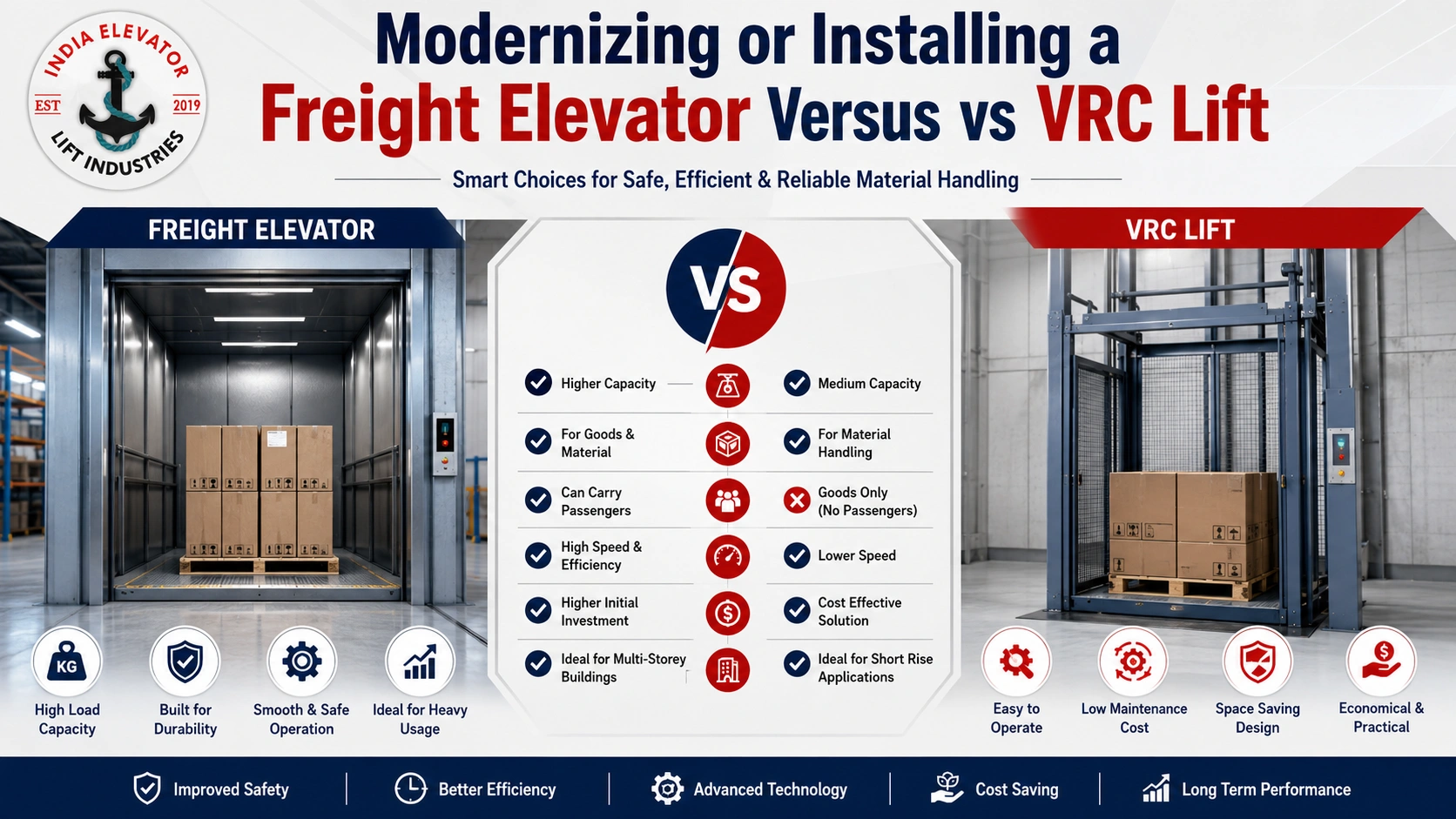
Freight Elevator Versus VRC Lift
When deciding between these systems, several factors should be evaluated.
Purpose
Freight-elevators are designed for transporting goods and may be configured to allow operator access. VRC lifts are strictly intended for material movement.
Code Requirements
A freight elevator installation typically follows elevator-specific regulations and standards. VRC lifts are governed by different material lift regulations.
Installation Cost
VRC lifts are often less expensive initially. However, a freight-elevator installation may offer greater flexibility and operational capabilities depending on facility requirements.
Travel Speed
Freight-elevators generally provide smoother and faster transportation.
Building Integration
Many commercial buildings prefer freight elevator installation because of its professional appearance and seamless integration into building infrastructure.
Factors to Consider Before Choosing a System
Before selecting a vertical transportation solution, businesses should evaluate:
Load Requirements
Determine the maximum weight that must be transported.
Frequency of Use
High-volume operations may benefit from a robust freight-elevator installation.
Available Space
The building layout influences system selection.
Budget
Initial investment and long-term maintenance costs should be considered.
Safety Requirements
Every facility must comply with applicable safety regulations.
A detailed assessment helps determine whether a VRC lift or freight elevator installation is the better solution.
Industries That Benefit from Freight Elevator Installation
Various industries rely on freight-elevators for daily operations.
Manufacturing Facilities
Transporting raw materials and finished products.
Warehouses
Moving pallets and inventory between storage levels.
Retail Centers
Handling stock and merchandise efficiently.
Hospitals
Transporting medical equipment and supplies.
Hotels
Moving laundry, food supplies, and operational materials.
Because of their versatility, freight-elevator installation projects remain a popular investment across multiple sectors.
Advantages of VRC Lifts
While freight-elevators offer numerous benefits, VRC lifts also provide advantages.
- Lower initial investment
- Simplified design
- Reduced installation complexity
- Efficient material transportation
- Suitable for warehouse environments
For some businesses, VRC lifts represent a cost-effective alternative to freight elevator installation systems.
When Should You Choose a Freight Elevator?
A freight-elevator is often the preferred choice when:
- Heavy-duty operations are involved
- High traffic volumes exist
- Faster movement is required
- Long-term durability is a priority
- Premium building integration is desired
In such situations, a professionally designed freight elevator installation delivers exceptional performance and long-term reliability.
How India Elevator Supports Modern Material Handling Solutions
India Elevator offers highly sophisticated solutions for all your requirements in vertical transport systems for industries, warehouses, or any other commercial buildings. Be it a new freight elevator installation system, upgrading a current one, or exploring options for a VRC lift, our solutions will enable you to make informed choices based on your needs.
We strive to deliver top-notch safety and performance in all our installations.
Conclusion
Modernizing an existing elevator or opting for the installation of a new freight elevator is a choice that must be made by considering your specific goals, budget, infrastructure, and material-handling needs. Although VRC lifts are a convenient choice for simple material lifting, professional freight-elevator installation is more versatile and economical.
A careful assessment of your organization’s requirements and the advice of experts, such as India Elevator, will help you find the perfect vertical transport system that can increase efficiency, ensure safety, and assist your organization in growing further.