
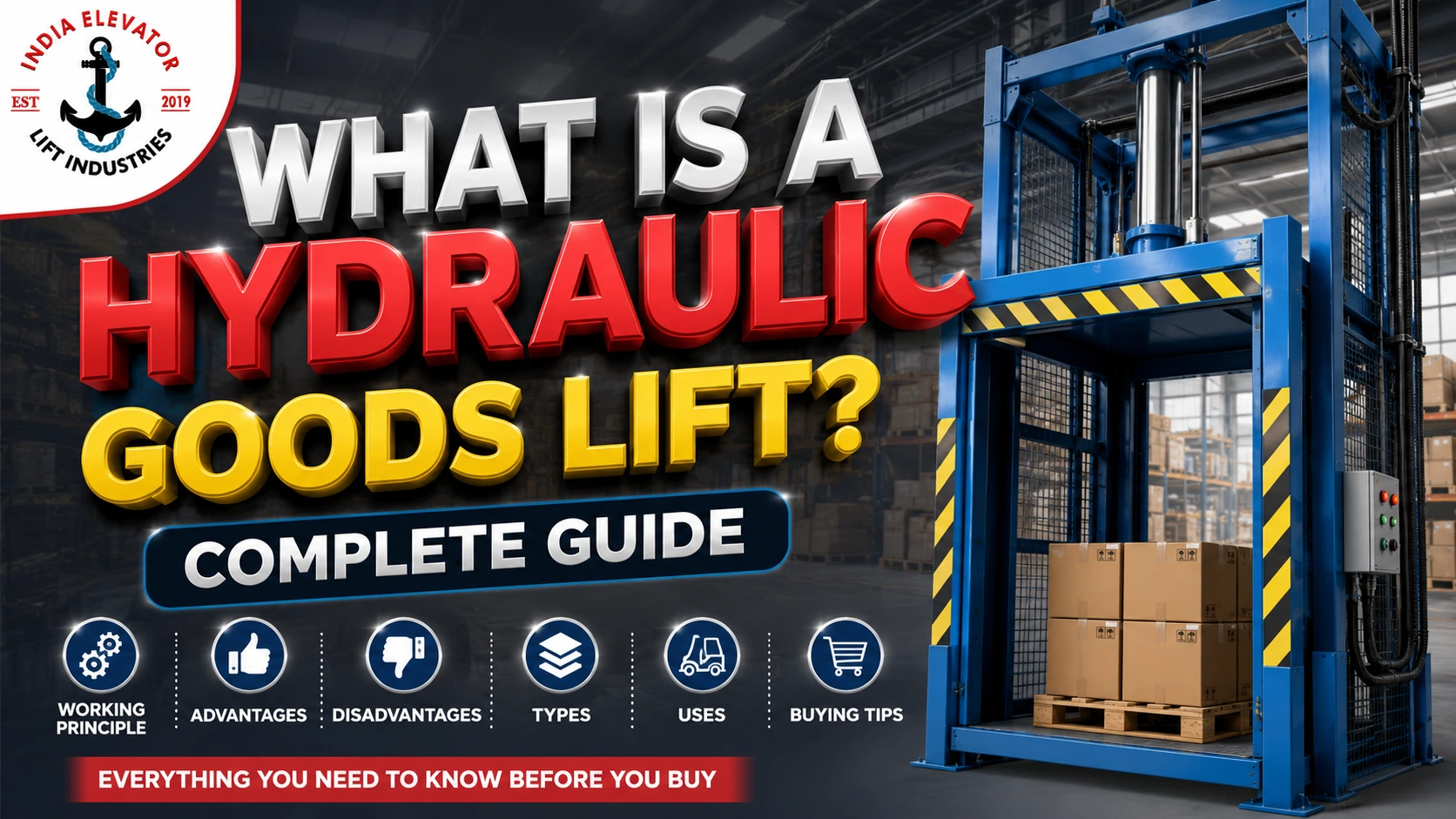
Introduction of Hydraulic Goods Lift
There comes a time in every business when it is slow, costly, and dangerous to move loads manually. Whatever type of business you have, whether it is warehousing, manufacturing, retailing, pharmaceutical production, an auto repair garage, hotels, or a logistics facility, moving your loads from floor to floor will take your precious time and put you at risk of sustaining work-related injuries. There are situations where conventional methods like ramps, forklifts, or manual handling become impossible in buildings where there is a lack of space.
A hydraulic goods lift is the ideal solution in such a situation. As opposed to passenger elevators, hydraulic goods lifts are designed to carry loads such as machinery, equipment, cartons, pallets, and other industrial materials from floor to floor without causing any risk to the handlers and building structures.
You must have information about how the equipment operates, where it can be installed, what its strengths and weaknesses are, and the factors affecting its performance before buying any hydraulic goods lift. Most people consider prices while buying any hydraulic goods lift, but buying an inappropriate lifting system may result in maintenance problems, delays in work, and even safety problems. Proper knowledge will allow you to buy appropriate equipment based on your needs instead of spending money on the cheapest one.
At India Elevator, we want our customers to know all technical aspects about lifting systems rather than believing in marketing. We have provided this guide in order to make business owners, plant managers, warehouse managers, architects, constructors, and facility managers aware of all technical aspects related to the hydraulic goods lift system. If you are installing a new goods elevator or replacing the existing one, then this guide will help you do that.
What Is a Hydraulic Goods Lift?
A hydraulic goods lift refers to a vertical conveyance used to transport materials by raising and lowering goods from various floor levels using hydraulic pressure. Unlike regular elevators, which operate with the help of cables and counterweight, the goods lift functions with the help of hydraulic oil, pumps, motors, and a hydraulic cylinder that provides the force needed to push the lift upwards. During its descent, the hydraulic fluid is carefully drained to facilitate the smooth movement of the lift.
Hydraulic goods lifts are built for the purpose of moving goods only; these lifts are often mounted in factories, warehouses, shopping malls, manufacturing units, pharmaceuticals, food processing industries, logistics companies, automobile industries, printing presses, hospitals, and commercial buildings where it becomes necessary to move goods easily.
Due to their effective lifting capacity and easy working process, hydraulic goods lift have been one of the most preferred choices of material handling equipment by many organizations.
What Is Lift Hydraulic Technology?
Lift hydraulic refers to the hydraulic system employed for producing lifting power. The basic principle behind hydraulic technology is Pascal’s Law, which says that the pressure applied to a fluid in a confined space will spread out in equal proportions in all directions.
In simple terms, hydraulic oil, when subjected to pressure through a hydraulic pump, exerts pressure on a piston present in a hydraulic cylinder. The piston rises and consequently raises the platform together with the load carried. Once the hydraulic pressure is released using control valves, the platform moves downward.
This enables the hydraulic lift to lift very heavy loads with amazing precision and stability.
How Does a Hydraulic Lift Work?
Understanding the working process helps buyers choose the right lifting solution for their facility. Although different models may include additional automation features, the basic working principle remains almost the same.
Step 1: Power Generation
The electric motor starts and drives the hydraulic pump.
Step 2: Hydraulic Oil Pressurization
The pump pushes hydraulic oil into the cylinder under high pressure.
Step 3: Cylinder Movement
The pressurized oil forces the piston upward inside the cylinder.
Step 4: Platform Lifting
The piston movement raises the lift platform carrying goods safely to the required floor.
Step 5: Controlled Stopping
Once the desired level is reached, sensors and control valves stop the platform accurately.
Step 6: Safe Lowering
When the operator commands the lift to descend, hydraulic valves slowly release the oil back into the reservoir, allowing the platform to come down smoothly without sudden jerks.
This simple yet efficient operating principle is one of the biggest reasons why hydraulic goods lift systems are widely used in industrial applications.
Main Components of a Hydraulic Goods Lift
Understanding the major components helps buyers evaluate product quality and long-term reliability.
1. Hydraulic Power Pack
The hydraulic power pack includes the electric motor, hydraulic pump, oil reservoir, valves, filters, and pressure control system. It generates the hydraulic pressure required to operate the lift.
2. Hydraulic Cylinder
The hydraulic cylinder converts hydraulic pressure into lifting force. It is considered the heart of the lifting system and plays a major role in determining lifting capacity and stability.
3. Lift Platform
The platform carries the load. Depending on the application, it may be manufactured using heavy-duty mild steel, stainless steel, or anti-slip chequered plates.
4. Guide Rails
Guide rails ensure that the platform moves vertically without unwanted vibration or lateral movement.
5. Control Panel
Modern lifts include user-friendly control panels with floor selection buttons, emergency stop switches, overload indicators, and safety alarms.
6. Safety Valves
Safety valves prevent excessive hydraulic pressure and help protect the system from damage during abnormal operating conditions.
7. Hydraulic Oil Tank
The oil reservoir stores hydraulic fluid required for smooth lift operation and helps maintain consistent hydraulic pressure.
8. Landing Gates
Landing gates improve workplace safety by preventing accidental access to the lift shaft during operation.
Types of Hydraulic Goods Lift
Different businesses require different lifting solutions. Selecting the right type depends on load capacity, building structure, lifting height, and frequency of use.
1. Single Mast Hydraulic Goods Lift
This compact lifting solution is suitable for light to medium-duty applications where space is limited. It is commonly installed in retail stores, small warehouses, workshops, and commercial buildings.
Best For
- Small warehouses
- Retail shops
- Spare parts stores
- Service centers
2. Double Mast Hydraulic Goods Lift
A double mast design provides improved stability and supports heavier loads. It is widely used in industrial manufacturing units and logistics facilities.
Best For
- Manufacturing plants
- Heavy engineering industries
- Industrial warehouses
- Packaging facilities
3. Wall Mounted Hydraulic Goods Lift
This hydraulic goods lift is attached directly to a structural wall, reducing the need for extensive civil construction. It is an excellent choice for buildings with limited installation space.
Best For
- Existing commercial buildings
- Hotels
- Restaurants
- Hospitals
4. Pitless Hydraulic Goods Lift
A pitless model eliminates the requirement for a deep foundation pit, making installation easier where excavation is difficult or restricted.
Best For
- Renovation projects
- Existing factories
- Rental buildings
- Temporary industrial facilities
5. Hydraulic Cargo Lift
A hydraulic cargo lift is specially designed for transporting bulky industrial equipment, heavy pallets, machine components, and large cartons. These lifts are commonly installed in logistics centers, manufacturing plants, distribution hubs, and export warehouses where high load capacity is essential.
6. Goods Hoist
A goods hoist is generally used for vertical lifting of construction materials, industrial products, or warehouse inventory. Unlike passenger elevators, these systems are designed exclusively for material transportation and are widely used on construction sites and industrial premises.
Where Are Hydraulic Goods Lifts Used?
The uses of hydraulic goods lift systems extend across numerous industries because they improve productivity while reducing manual handling. Some of the most common hydraulic lift uses include:
- Manufacturing plants
- Automobile workshops
- Warehouses
- Distribution centers
- Pharmaceutical industries
- Food processing units
- Textile factories
- Printing industries
- Hotels
- Shopping malls
- Hospitals
- Cold storage facilities
- Chemical industries
- Packaging units
- Logistics hubs
- E-commerce fulfillment centers
Businesses choose these lifting systems because they can handle heavy materials safely, minimize product damage, improve workflow efficiency, and create a safer working environment for employees.
Why Businesses Prefer Hydraulic Goods Lifts
In most cases, the installation of an industrial goods lift does not mean only the vertical movement of products from one floor to another; rather, it means making the process more efficient and safe from both employee fatigue and accident aspects. In comparison with traditional manual handling of products, an appropriate goods elevator will help to reduce loading time and prevent accidents.
The other important factor that encourages companies to use the industrial goods lift system is its stable operation when carrying heavy loads. Hydraulic systems generally have fewer parts compared with traction elevators and, therefore, are more reliable. The selection of a suitable lifting system depends on whether it is necessary to move raw materials, finished products, machines, or packed goods.
Advantages of Hydraulic Lift
Understanding the advantages of hydraulic lift helps businesses evaluate whether this lifting system matches their operational needs. Every industry has different material handling requirements, but hydraulic technology has consistently proven to be one of the most dependable solutions for lifting heavy loads safely and efficiently.
Excellent Load Carrying Capacity
One of the biggest hydraulic lift advantages is its ability to lift heavy materials without compromising stability. Whether transporting machinery, pallets, cartons, raw materials, or finished products, hydraulic systems are designed to handle substantial weight with confidence.
Smooth and Stable Operation
A well-designed hydraulic system provides controlled lifting and lowering, reducing sudden jerks that may damage delicate products. This smooth movement is particularly beneficial for industries dealing with fragile materials such as pharmaceuticals, electronics, glass, and food products.
Improved Workplace Safety
Manual handling of heavy goods often leads to workplace injuries and product damage. Installing a properly designed hydraulic lift significantly reduces manual lifting, creating a safer working environment for employees while improving operational efficiency.
Space-Efficient Design
Unlike many other lifting systems, hydraulic lifts require comparatively less overhead space. This makes them suitable for factories, warehouses, and commercial buildings where installation space is limited.
Lower Installation Complexity
Many hydraulic lifting systems can be installed with relatively simple civil modifications compared to other vertical transportation systems. This helps reduce project delays and simplifies the installation process.
Reliable Performance
Hydraulic systems have fewer moving mechanical components than several other lift technologies. When maintained properly, they deliver consistent performance over many years.
Better Control During Lifting
Hydraulic pressure allows smooth acceleration and controlled stopping, reducing the possibility of load shifting during transportation.
Suitable for Heavy-Duty Applications
Industries operating continuously throughout the day often prefer hydraulic lifting technology because it can efficiently handle repetitive heavy-load movement.
Flexible Installation Options
Modern goods lift systems are available in pit-mounted, pitless, wall-mounted, and customized configurations, allowing businesses to select solutions according to available space.
Long Service Life
Routine inspection, timely lubrication, and scheduled hydraulic oil replacement help extend the operational life of the equipment while maintaining consistent performance.
Disadvantages of Hydraulic Lift
Although hydraulic systems offer numerous benefits, understanding the disadvantages of hydraulic lift is equally important before investing. Every lifting technology has certain limitations, and buyers should evaluate them based on their specific application.
Slower Speed
Hydraulic lifts generally operate at lower speeds than traction elevators. However, for industrial material handling, smooth operation is often more important than high travel speed.
Height Limitations
Hydraulic systems are usually recommended for low-rise buildings because lifting efficiency decreases as travel height increases.
Regular Maintenance Required
Hydraulic oil quality, seals, valves, and hoses require periodic inspection to ensure safe operation.
Oil Temperature Sensitivity
Extreme operating temperatures may affect hydraulic oil performance, making scheduled maintenance important in challenging environments.
Potential Oil Leakage
Poor maintenance or worn seals may result in hydraulic oil leakage. Regular servicing minimizes this risk significantly.
Energy Consumption
Some hydraulic lifting systems consume more electricity during upward movement because the motor operates throughout the lifting cycle.
Despite these considerations, many businesses continue choosing hydraulic technology because its overall benefits outweigh these limitations for low- and medium-rise industrial applications.
Common Uses of Hydraulic Lift
The uses of hydraulic lifts continue to expand as industries focus on safer and more efficient material handling. These lifting systems reduce manual effort, improve productivity, and help businesses transport heavy loads with greater reliability.
Some of the most common hydraulic goods lift uses include:
- Transporting raw materials between production floors
- Moving finished products to storage areas
- Loading and unloading warehouse inventory
- Shifting machine components
- Material handling inside manufacturing plants
- Moving heavy cartons in logistics centers
- Handling automobile spare parts
- Transporting pharmaceutical products
- Food processing material movement
- Textile roll transportation
- Paper and printing industry operations
- Packaging line support
- Cold storage material handling
- Chemical industry operations
- Retail inventory transportation
Because of these wide-ranging applications, hydraulic cargo lift solutions have become an essential part of modern industrial infrastructure.
Industries That Commonly Use Hydraulic Goods Lifts
Different industries require different lifting capacities, platform sizes, and safety features. Selecting the correct lifting solution depends on operational requirements rather than simply choosing the largest capacity available.
Industries that commonly use industrial goods lift systems include:
- Manufacturing industries
- Engineering companies
- Automobile plants
- Pharmaceutical companies
- Food processing units
- Textile industries
- Plastic manufacturing
- Printing industries
- Packaging companies
- Logistics centers
- Warehouses
- Cold storage facilities
- Hospitals
- Hotels
- Shopping malls
- E-commerce fulfillment centers
- Chemical industries
- Electronics manufacturing
These industries rely on goods lifts because they improve workflow while reducing manual material handling.
Hydraulic Goods Lift Specification Table
The following specifications represent commonly available industrial models. Actual specifications vary depending on application, building structure, safety requirements, and customization.
| Specification | Details |
|---|---|
| Product Type | Hydraulic Goods Lift |
| Lifting Capacity | 500 kg – 10,000 kg |
| Platform Size | Customized |
| Lifting Height | Up to 30 meters (application dependent) |
| Drive Type | Hydraulic |
| Operation | Push Button / Automatic |
| Power Supply | 3-phase, 415V, 50Hz |
| Platform Material | Mild Steel / Stainless Steel |
| Structure | Heavy Duty Steel |
| Speed | Approximately 0.1–0.3 m/s |
| Safety Features | Emergency Stop, Overload Protection, Safety Valve, Limit Switches |
| Installation Type | Pit Mounted / Pitless / Wall Mounted |
| Control Panel | PLC or Standard Electrical Panel |
| Surface Finish | Powder Coated / Painted |
| Usage | Industrial & Commercial Material Handling |
Things to Consider Before Buying a Hydraulic Goods Lift
Buying a lifting system is a long-term investment. Instead of comparing only prices, businesses should carefully evaluate operational requirements to avoid future maintenance issues or capacity limitations.
Understand Your Load Requirement
Calculate both the average and maximum load that will be transported. Selecting insufficient capacity can reduce equipment life and create safety risks.
Measure Available Space
Evaluate shaft dimensions, floor height, platform size requirements, headroom, and installation area before finalizing any design.
Consider Future Expansion
Many businesses experience production growth over time. Choosing a lift with moderate additional capacity can prevent expensive upgrades later.
Check Safety Features
Important safety features include overload protection, emergency stop buttons, safety valves, landing gates, interlocking systems, anti-fall protection, and limit switches.
Evaluate Power Availability
Ensure that the available electrical supply matches the lift’s operational requirements.
Choose Quality Components
The reliability of a lifting system depends significantly on the quality of its hydraulic cylinders, pumps, motors, valves, guide rails, electrical components, and structural steel.
Review Maintenance Requirements
A system that is easy to inspect and maintain generally delivers lower operating costs throughout its service life.
Verify Installation Support
Professional installation and proper commissioning are essential for long-term safe operation.
Common Mistakes Buyers Should Avoid
Many businesses unknowingly make purchasing decisions based only on price. This often results in higher operating costs later.
Some common mistakes include:
- Choosing insufficient lifting capacity
- Ignoring future production growth
- Purchasing without site inspection
- Overlooking safety certifications
- Selecting low-quality hydraulic components
- Ignoring maintenance accessibility
- Comparing only purchase price instead of lifetime operating cost
- Not checking after-sales service availability
- Failing to evaluate installation requirements
- Choosing a standard model when customization is required
Making informed decisions helps businesses avoid unnecessary expenses and ensures the equipment remains reliable for years.
How a Hydraulic Goods Lift Solves Real Business Problems
Apart from moving loads, for many companies, the key problem is the smooth operation and efficiency of their work processes. Moving items manually may result in slow production processes, staff exhaustion, and damage to the material. A good design and installation of goods hoists or hydraulic cargo lifts allows solving these issues and making controlled vertical movement possible.
The aim of the systems is not to replace staff but rather to facilitate the process and make manual lifting unnecessary for workers and allow them to perform other more profitable work. No matter what you need – delivering materials to the factory floor, moving finished products to the warehouse, or transporting large machines, choosing a suitable lifting device will improve your daily work routine. Those companies that care about safety, efficiency, and long-lasting operations should realize that choosing the correct goods elevator means choosing the solution to operational problems.
Preventive maintenance is one of the most essential aspects of safety, efficiency, and durability of hydraulic goods lift systems. While many companies pay attention to the installation itself and neglect preventive maintenance, it leads to increased expenses later.
The most important maintenance practices include:
-
Checking hydraulic oil levels regularly.
-
Inspecting hoses and seals for leakage.
-
Cleaning guide rails and moving parts.
-
Testing emergency stop functions.
-
Inspecting landing gates and interlocks.
-
Checking electrical connections.
-
Monitoring unusual noise or vibration.
-
Replacing worn components on time.
-
Following a scheduled service plan.
-
Maintaining proper load limits during operation.
Essential Safety Tips for Goods Lift Operation
Safety should always be the priority when operating any goods lift or goods hoist. Even a well-designed lifting system requires proper operating practices.
Important safety guidelines:
-
Never exceed the rated load capacity.
-
Ensure goods are placed evenly on the platform.
-
Keep unauthorized persons away from the lift area.
-
Do not transport passengers in a goods lift unless specifically designed for that purpose.
-
Inspect the lift before starting daily operations.
-
Use emergency stop controls when necessary.
-
Train operators properly.
-
Report abnormal operation immediately.
-
Keep the platform free from loose objects.
-
Schedule periodic professional inspections.
Hydraulic Lift vs Other Material Handling Options
Many businesses compare a hydraulic lift with forklifts, ramps, conveyors, or traction elevators. Each system has its own role, but hydraulic lifts are often preferred when heavy vertical transportation is required within a building.
|
Feature |
Hydraulic Goods Lift |
|---|---|
|
Best Use |
Heavy vertical lifting |
|
Load Capacity |
High |
|
Installation Space |
Moderate |
|
Operation |
Smooth and stable |
|
Maintenance |
Regular but manageable |
|
Ideal For |
Factories, warehouses, logistics |
|
Passenger Transport |
Generally no |
|
Heavy Material Handling |
Excellent |
Where Businesses Commonly Use Hydraulic Goods Lifts
The chart below shows the industries where hydraulic lift use is most common.
Industry-wise usage of hydraulic goods lifts

Frequently Asked Questions
1. What is a hydraulic goods lift used for?
A hydraulic goods lift is used to transport heavy materials such as pallets, cartons, machinery, raw materials, and finished products between different floors safely and efficiently.
The major advantages of hydraulic lift systems include high load capacity, smooth operation, better safety, space-efficient design, reliable performance, and suitability for heavy-duty industrial applications.
Common disadvantages of hydraulic lift systems include lower operating speed, height limitations for very tall buildings, regular maintenance requirements, and potential hydraulic oil leakage if maintenance is neglected.
A hydraulic cargo lift is designed specifically for transporting goods and heavy materials, while a passenger elevator is designed primarily for carrying people.
Load capacity depends on the model and application. Industrial systems commonly range from 500 kg to several tons, with customized solutions available for heavier requirements.
A hydraulic lift should be inspected regularly and serviced according to the manufacturer’s maintenance schedule. High-usage industrial lifts generally require more frequent inspections.
Final Thoughts
Selecting an appropriate goods elevator is not just about conveying materials from one floor to another; it is about enhancing safety, avoiding delays, ensuring the safety of the labor force, and growth opportunities for the enterprise. An appropriate selection of hydraulic goods elevators will facilitate easy transport of heavy materials and save on effort.
To make the right choice, analyze your material demands, available area, plans of development, safety and serviceability issues. Only such a lifting system that helps to cope with your operational problems for many years ahead can be called the optimal one.
Here at India Elevator, we consider that our customers have the right to receive all the necessary information and assistance before deciding on purchasing any lifting system. In case of industrial goods elevators, goods hoists, or hydraulic cargo lifts, it is always better to know before buying.