In today’s speedy industrial and commercial setting, smoothly moving materials is key to keeping up productivity and safety at work. Companies in places like manufacturing plants, warehouses, malls, and office buildings totally depend on special lifting gear to haul heavy stuff up and down. Goods lifts and Industrial Goods Elevators fit this bill perfectly.
A goods lift’s job is to shift materials, gear, and hefty goods inside a building or factory. They’re built differently from passenger lifts – these are made to bear loads safely and get the job done efficiently. With industries expanding, there’s a fast-growing need for top-notch industrial Goods lift solutions all across India.
India Elevator understands how vital dependable lifting systems are for running a smooth operation. We cover the basics of goods lifts – how they work, what kinds there are, their perks, and when you’d use them – in this guide.
Understanding Goods Lifts and Goods Elevators
A goods elevator is used for moving materials, products, machinery, and inventory vertically. Found in places like factories, warehouses, retail stores, hospitals, and industrial facilities, they really help out by reducing manual labor, boosting safety, and making operations smoother.
Built tough with strong frames and safe features, goods lifts easily manage heavy loads. They come in different sizes too, able to handle anything from a couple of hundred kilograms up to several tons, based on what’s needed for the specific job.
So these lifts are crucial for keeping things running efficiently in lots of different settings.
How Does a Goods Lift Work?
A goods lift operates using a lifting mechanism that moves a platform or cabin vertically through a shaft. Depending on the type of system, the lifting mechanism may be powered by hydraulic cylinders, traction systems, wire ropes, or chains.
The process generally involves:
- Loading materials onto the lift platform
- Activating the control system
- Vertical movement between floors
- Safe unloading at the destination level
Modern goods elevator systems incorporate safety features such as overload protection, emergency stop buttons, interlocking doors, limit switches, and automatic braking systems to ensure secure operation.
Types of Goods Lifts
1. Hydraulic Goods Elevator
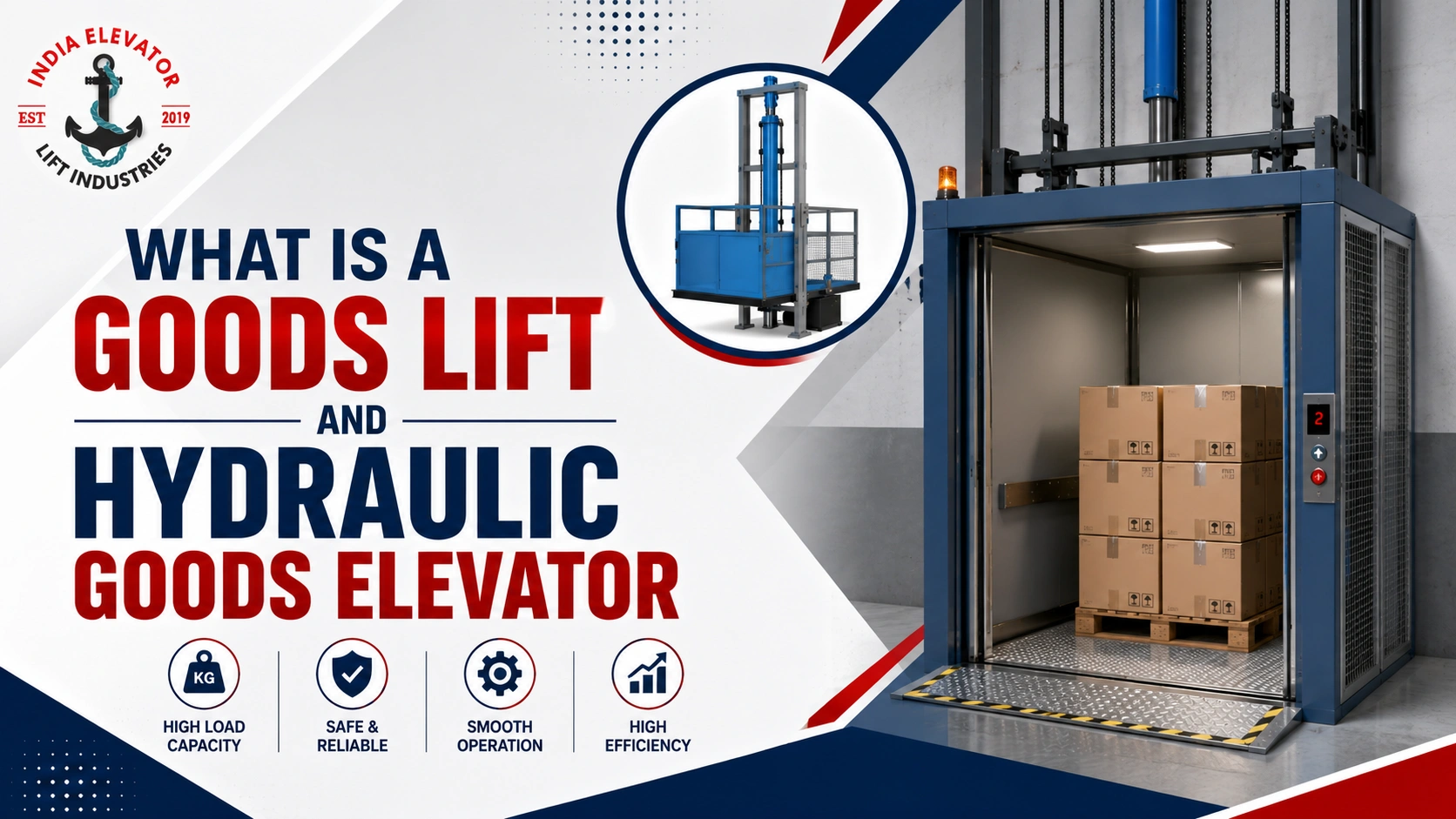
A hydraulic goods elevator is one of the most popular lifting solutions used in industrial and commercial settings. It utilizes hydraulic cylinders and fluid pressure to move the lift platform vertically.
Benefits of Hydraulic Goods Elevators
- Smooth and quiet operation
- High load-carrying capacity
- Lower maintenance requirements
- Energy-efficient performance
- Ideal for low- and medium-rise buildings
Many industries prefer a hydraulic goods elevator because it offers excellent reliability and can easily handle heavy loads.
2. Industrial Goods Lift
An industrial goods lift is specifically designed for factories, warehouses, manufacturing plants, and logistics facilities. These lifts are engineered to transport raw materials, machinery parts, finished products, and heavy equipment safely.
Features of Industrial Goods Lifts
- Heavy-duty construction
- Large platform sizes
- High load capacities
- Robust safety systems
- Long operational lifespan
An industrial goods lift significantly improves workflow efficiency by reducing the time required for material movement.
3. Industrial Goods Elevator
An industrial goods elevator is commonly installed in multi-level industrial buildings where continuous transportation of materials is required. These elevators are designed for demanding environments and can operate efficiently under heavy-duty conditions.
Industries such as automotive manufacturing, food processing, pharmaceuticals, and warehousing commonly use industrial goods elevators to streamline production and logistics operations.
4. Goods Hoist
A goods hoist is another type of vertical lifting equipment used for transporting materials between floors. Unlike traditional elevators, goods hoists often feature open platforms or enclosed cages and are widely used at construction sites and industrial facilities.
Advantages of Goods Hoists
- Quick installation
- Cost-effective operation
- Suitable for construction projects
- Heavy-duty lifting capabilities
- Minimal maintenance requirements
A goods hoist is particularly useful for transporting construction materials, tools, and equipment efficiently.
Key Components of a Goods Lift
Every goods elevator consists of several important components that ensure safe and reliable operation:
Lift Platform
The platform carries the goods and materials being transported.
Guide Rails
These maintain smooth vertical movement and stability.
Drive System
This may include hydraulic cylinders, traction motors, chains, or wire ropes.
Control Panel
The control panel allows operators to manage lift movement safely.
Safety Devices
Safety mechanisms include emergency brakes, overload sensors, door interlocks, and limit switches.
Benefits of Installing Goods Lifts
Improved Productivity
Manual transportation of heavy goods can be time-consuming. Goods lifts help businesses move materials quickly and efficiently.
Enhanced Workplace Safety
Lifting heavy loads manually increases the risk of accidents and injuries. A goods elevator minimizes these risks by providing safe mechanical transportation.
Cost Savings
Automated material handling reduces labor costs and improves operational efficiency.
Better Space Utilization
Vertical transportation systems maximize available floor space and improve facility organization.
Increased Load Capacity
Modern industrial goods lift systems can transport extremely heavy materials without compromising safety.
Applications of Goods Lifts
Manufacturing Industries
Factories use industrial goods elevators to transport raw materials, machinery components, and finished products between production floors.
Warehouses
Warehouses rely on goods lifts to move inventory efficiently between storage levels.
Shopping Malls
Retail centers use goods elevators to transport stock and merchandise without disturbing customers.
Hospitals
Hospitals utilize goods lifts for transporting medical equipment, supplies, and laundry.
Hotels
Hotels often install goods lifts for housekeeping operations and service logistics.
Construction Sites
A goods hoist is commonly used to move construction materials to different building levels.
Factors to Consider Before Choosing a Goods Lift
Load Capacity
Determine the maximum weight that the lift will need to carry regularly.
Lift Size
The platform dimensions should accommodate the materials being transported.
Building Structure
The building layout and available installation space play a major role in selecting the appropriate system.
Operating Frequency
Facilities with high material movement require heavy-duty industrial goods lift solutions.
Safety Features
Choose a lift equipped with modern safety systems and compliance certifications.
Why Hydraulic Goods Elevators Are Popular
The popularity of the hydraulic goods elevator continues to grow because of its versatility and cost-effectiveness. These elevators offer reliable performance while handling heavy loads with precision.
Advantages include:
- Lower installation costs
- Smooth operation
- Excellent load-bearing capacity
- Reduced mechanical wear
- Easy maintenance
For many businesses, a hydraulic goods elevator provides the ideal balance between performance and affordability.
Future of Goods Lift Technology
The future of goods lifts is being shaped by technological advancements and automation. Manufacturers are integrating smart monitoring systems, IoT-enabled controls, predictive maintenance solutions, and energy-efficient technologies into modern elevators.
Emerging trends include:
- Smart lift management systems
- Remote diagnostics
- Energy-saving drive systems
- Enhanced safety automation
- Advanced load monitoring
These innovations are helping businesses improve operational efficiency while reducing maintenance costs.
Conclusion
A goods lift, or goods elevator is vital for businesses that need to move materials safely and smoothly. Depending on your needs, you might opt for a goods hoist, industrial goods lift, industrial goods elevator, or hydraulic goods elevator. The right choice can boost productivity and improve safety at work.
At India Elevator, we think reliable lifting systems are essential for today’s businesses. Knowing the different types, uses, and perks of these lifts helps companies pick what works best for them. With industry growth, these advanced lifting techs keep getting more important for making operations efficient and secure.