
In today’s fast-moving world, lifting heavy loads safely and efficiently is a necessity across industries, commercial buildings, and residential spaces. Among the different material-handling and vertical-transportation solutions available, the hydraulic lift stands out for its simple working mechanism, durability, and flexibility. At India Elevator, we provide highly reliable hydraulic lift solutions designed to make movement smoother, safer, and more convenient for everyone.
What is Hydraulic Lift?
A hydraulic lift is a lifting device that operates using fluid pressure—usually hydraulic oil—to raise or lower loads. The basic principle is based on Pascal’s Law, which states that when pressure is applied to a confined fluid, it is transmitted equally in all directions. This forms the core of the hydraulic lift explanation.
At India Elevator, we provide industry-grade hydraulic lift project explanation systems that focus on performance, safety, and energy efficiency.
Types of Hydraulic Lifts
Hydraulic lifts come in different types depending on their design, structure, and purpose. Here are the most commonly used ones:
- Hydraulic Passenger Lift: This type is widely used in residential apartments, small commercial buildings, and low-rise offices. It is cost-effective, smooth in operation, and ideal for buildings that require a compact lift solution. The uses of hydraulic lift drive ensures quiet performance with minimal vibrations.
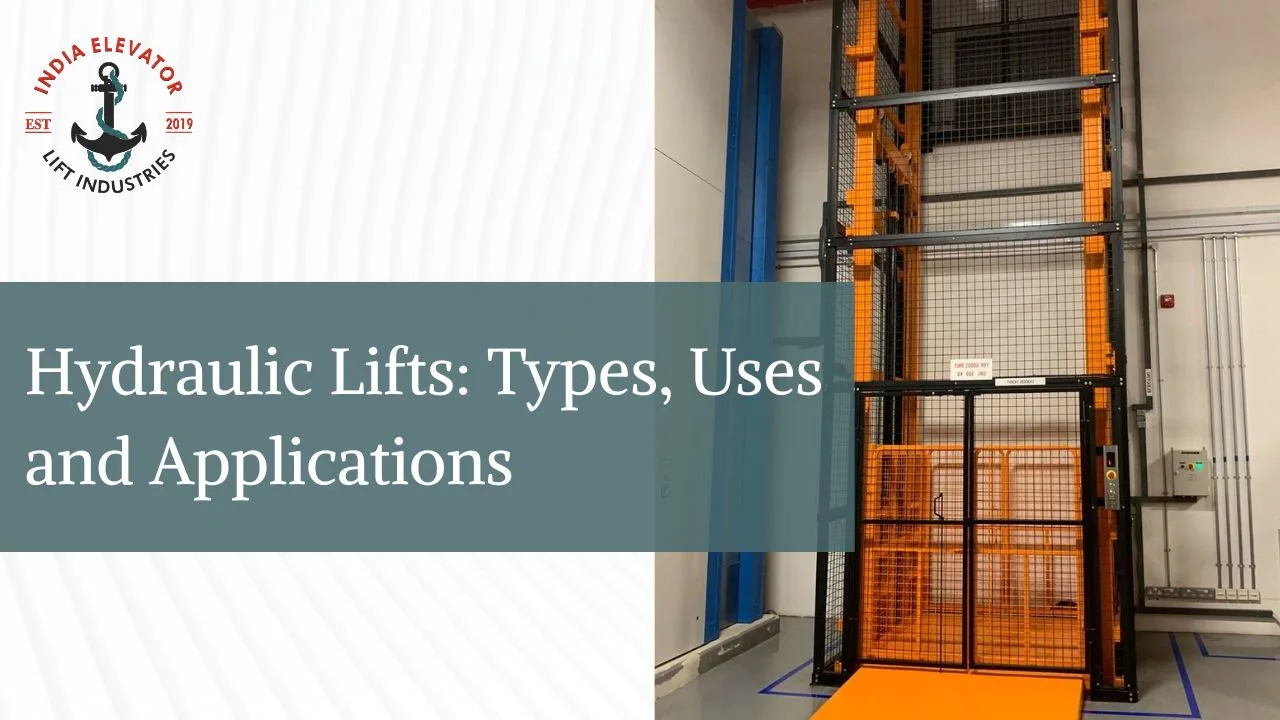
- Goods/Material Hydraulic Lift: Factories, warehouses, logistics hubs, and industrial plants frequently use material-handling hydraulic lifts. They can easily lift heavy loads such as pallets, machinery parts, boxes, and finished products. These lifts are known for durability, load-bearing strength, and long service life.
- Hydraulic Scissor Lift: A scissor lift uses a crisscross steel frame that opens and closes like scissors. It is typically used for maintenance work, repairs, painting jobs, and accessing elevated areas. The hydraulic mechanism ensures controlled vertical movement and stability.
- Car Hydraulic Lift: Car lifts are popular in automobile service centers, showrooms, parking systems, and residential garages. They help raise vehicles for inspection, repairs, or two-level parking. Hydraulic lift explanation systems make them reliable and easy to maintain.
- Hydraulic Home Lift: These compact and stylish lifts are perfect for villas, duplex homes, and bungalows. They offer easy accessibility for seniors, differently-abled individuals, and families. Hydraulic home lifts operate smoothly and consume less energy compared to traditional rope-driven lifts.
- Dock Leveler Hydraulic Lift: Used in loading bays, warehouses, and logistics areas, these lifts bridge the height difference between trucks and loading platforms. The hydraulic mechanism provides strength and flexibility to handle heavy-duty loading operations.
Uses of Hydraulic Lifts
Hydraulic lifts are used in almost every sector due to their strength, durability, and easy installation. Some key uses include:
- Transporting people between floors
- Moving goods in warehouses and factories
- Supporting maintenance and repair tasks
- Lifting vehicles for inspection
- Providing accessibility to elderly or disabled individuals
- Streamlining loading and unloading operations
At India Elevator, we provide customized hydraulic lift solutions that match different industry needs and building designs.
Also Read : Understanding Hydraulic Lifts: Everything You Need to Know
Hydraulic Lift Explanation: How It Works
To understand the hydraulic lift explanation, let’s break the process into simple steps:
- Step 1: Pump Activation
A hydraulic pump pushes fluid (usually oil) from the reservoir into the cylinder. - Step 2: Pressure Build-Up
As fluid enters the cylinder, pressure increases. - Step 3: Piston Movement
The pressure pushes the piston upward, lifting the platform or cabin. - Step 4: Controlled Descent
When the valve opens, fluid returns to the reservoir, allowing the lift to come down smoothly.
This mechanism ensures a steady, controlled lifting and lowering motion without sudden jerks, making the hydraulic lift highly reliable.
Applications of Hydraulic Lifts
Hydraulic lifts have versatile applications across various sectors:
- Residential Buildings: Hydraulic home lifts offer comfort, accessibility, and an aesthetic touch to modern homes. They are perfect for low-rise structures and consume less power.
- Commercial Buildings: Shopping malls, offices, hospitals, and hotels use hydraulic passenger lifts to ensure the smooth movement of people, luggage, and goods.
- Industrial Facilities: Factories rely heavily on hydraulic lifts for loading heavy items, transporting raw materials, and positioning machines during assembly.
- Automotive Sector: Vehicle inspection, repair, and display setups require hydraulic car lifts for safe and efficient lifting.
- Warehousing and Logistics: Dock levelers, scissor lifts, and material-handling lifts make warehouse operations faster and more organized.
Hydraulic lift principle plays a crucial role in modern transportation and material-handling systems. Their simple design, powerful performance, and smooth operation make them suitable for a wide range of uses and applications. Whether it’s a home, office, warehouse, or factory, hydraulic lifts help improve convenience, safety, and productivity. At India Elevator, we provide high-quality hydraulic lift solutions tailored to your needs. With a strong focus on technology, safety standards, and customer satisfaction, we ensure that every lift delivers superior performance and long-term reliability.