The present-day industrial sector requires companies to handle materials efficiently because it serves as the foundation for their operational productivity. Throughout their operations, businesses working in warehouses, factories, and distribution centers continuously seek more intelligent methods to transfer goods between various operational levels. The Vertical Reciprocating Conveyor (VRC) serves as a highly efficient solution for this purpose.
The current industrial environment requires businesses to handle materials efficiently, as this process improves their operational efficiency and workplace security. Companies, from warehouses to factories and logistics centers, need trustworthy solutions that enable them to transport goods between their various operational areas. The definition of a vertical reciprocating conveyor needs to be understood in this context.
A vertical reciprocating conveyor (VRC) stands as an economical solution that efficiently transports materials between different vertical levels. This blog will provide all necessary information about its operational mechanism, advantages, and application areas, plus details about India Elevator, which develops superior elevator systems.
What is a VRC?
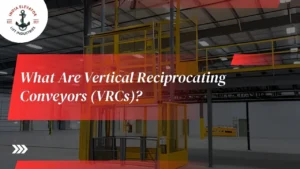
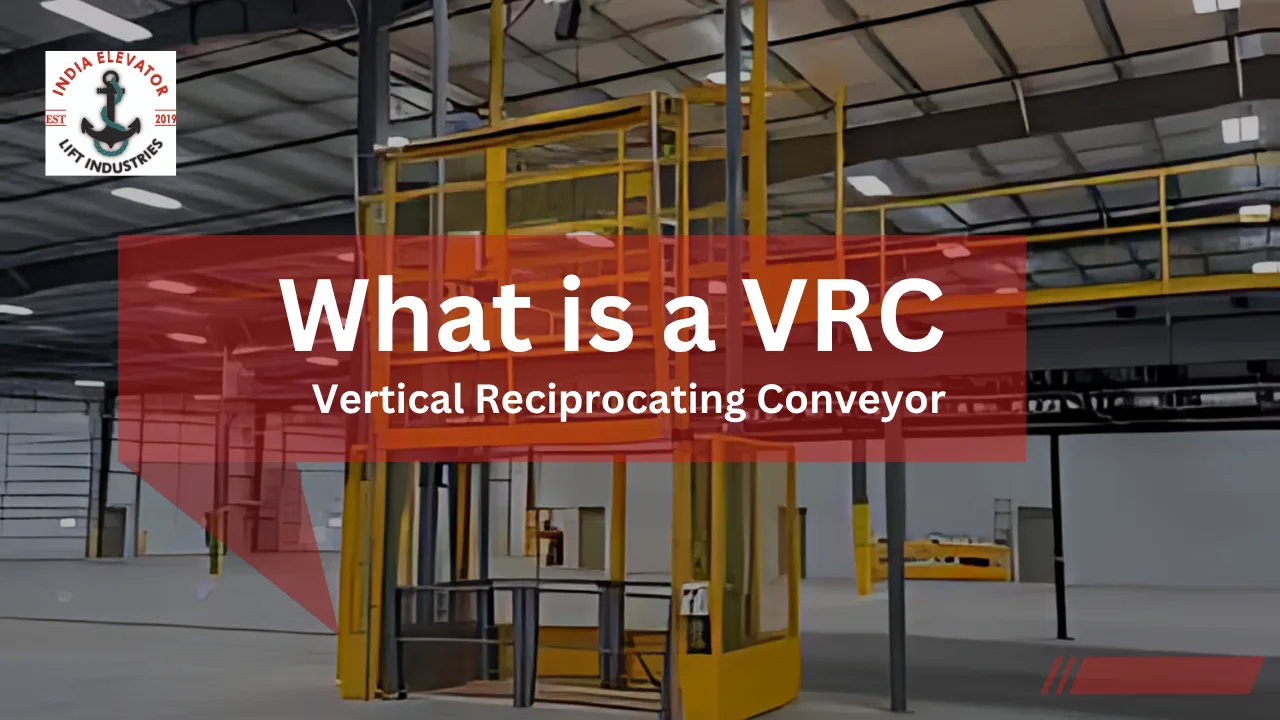
A vertical reciprocating conveyor is a type of mechanical lifting system designed to move materials vertically between two or more levels. VRCs function as cargo transportation systems because they were specifically designed to move goods between different locations while excluding human passenger use.
This system operates as a reciprocating vertical conveyor, which uses a platform that moves vertically along guide rails in its operation. The system operates through three different power systems, which include hydraulic and mechanical, and chain-driven systems, to meet design specifications and load requirements.
Understanding VRC Vertical Reciprocating Conveyor Systems
A VRC vertical reciprocating conveyor is engineered to handle a wide variety of materials, including:
- Pallets
- Boxes and cartons
- Machinery components
- Industrial tools
- Bulk materials
These systems are highly customizable and can be tailored to meet the specific needs of different industries.
How Does a Vertical Reciprocating Conveyor Work?
The working principle of a vertical reciprocating conveyor is quite straightforward yet highly efficient.
- Loading – Materials are placed on the platform at the lower level.
- Lifting Mechanism – The system is activated using a control panel.
- Vertical Movement – The platform moves upward or downward along guide columns.
- Unloading – Once it reaches the desired level, materials are safely unloaded.
Depending on the system type, the lifting mechanism can include:
- Hydraulic cylinders
- Chain-driven motors
- Screw-driven systems
Types of VRC Material Lifts
There are several types of VRC material lifts, each designed for specific applications:
1. Hydraulic VRC
- Ideal for heavy loads
- Smooth and stable operation
- Common in warehouses and factories
2. Mechanical VRC
- Uses chains or belts
- Suitable for moderate loads
- Requires less maintenance
3. Cantilever VRC
- Platform supported on one side
- Easy loading and unloading
- Space-saving design
4. Straddle VRC
- Platform supported on both sides
- Suitable for heavier loads
- Enhanced stability
Key Features of the Reciprocating Vertical Conveyor
A reciprocating vertical conveyor offers several advanced features that make it a preferred choice in industries:
- High Load Capacity – Can handle heavy materials with ease
- Customizable Design – Tailored to specific height and load requirements
- Safety Mechanisms – Includes limit switches, safety gates, and overload protection
- Durability – Built with robust materials for long-term use
- Space Efficiency – Requires minimal floor space compared to ramps
Benefits of Using VRC Material Lifts
Installing VRC material lifts in your facility offers numerous advantages:
1. Improved Efficiency
A vertical reciprocating conveyor reduces manual labor and speeds up material handling processes.
2. Enhanced Safety
Unlike manual lifting or forklifts, VRCs minimize the risk of accidents and injuries.
3. Cost-Effective Solution
Compared to elevators or complex conveyor systems, VRCs are more affordable and easier to maintain.
4. Versatility
They can be used across multiple industries for different types of materials.
5. Space Optimization
VRCs eliminate the need for ramps, saving valuable floor space.
Applications of VRC Vertical Reciprocating Conveyor
The use of VRC vertical reciprocating conveyor systems is widespread across various industries:
1. Warehouses and Logistics
Used for moving goods between storage levels efficiently.
2. Manufacturing Units
Helps transport raw materials and finished products across floors.
3. Retail and Distribution Centers
Facilitates smooth handling of bulk goods.
4. Automobile Industry
Used for lifting heavy components and assemblies.
5. Food Processing Industry
Ensures hygienic and safe transportation of materials.
Why Choose India Elevator for VRC Solutions?
When it comes to reliable and efficient vertical reciprocating conveyor systems, India Elevator is a trusted name in the industry.
What Sets India Elevator Apart?
- Customized Solutions – Designed according to your specific requirements
- Advanced Technology – Incorporating modern engineering and safety standards
- Durable Construction – Built for long-term industrial use
- Expert Support – From installation to maintenance
- Cost Efficiency – High performance at competitive pricing
With years of experience in material handling solutions, India Elevator ensures that every reciprocating vertical conveyor system meets the highest standards of quality and safety.
Safety Considerations in VRC Systems
Safety is a crucial factor when working with VRC material lifts. Modern systems include:
- Safety gates and enclosures
- Emergency stop buttons
- Overload protection
- Limit switches
- Interlocking systems
These features ensure smooth and secure operations in industrial environments.
Factors to Consider Before Installing a VRC
Before choosing a vertical reciprocating conveyor, consider the following:
- Load capacity requirements
- Number of floors
- Available space
- Type of materials to be handled
- Frequency of use
- Safety standards
Working with a trusted provider like India Elevator ensures you get the right solution tailored to your needs.
Future of Vertical Reciprocating Conveyors
With increasing automation in industries, the demand for efficient material handling systems is growing rapidly. The future of VRC vertical reciprocating conveyor systems includes:
- Smart automation and IoT integration
- Energy-efficient designs
- Enhanced safety features
- Faster and more precise operations
Conclusion
Business decision-making, which involves vertical material handling, begins with knowledge of VRC systems. The vertical reciprocating conveyor operates as more than a lifting machine because it delivers three major benefits that enhance operational efficiency throughout work processes.
VRC material lifts have become essential equipment for modern industrial operations that require vertical transportation between their different operational areas. India Elevator provides reliable systems that maintain high quality and long-lasting performance while meeting your exact requirements.
A reciprocating vertical conveyor system represents an intelligent, future-ready solution that will improve your material handling operations.